


I still remember the first time I watched my points balance grow. 500 points turned into 1,000. Then it was 5,000. After my first-ever Amex sign-up bonus back in 2018 (100,000 Velocity Points – a giddying amount for me), it skyrocketed to six figures. Suddenly, those First Class suites felt within reach for the first time.
But here’s the uncomfortable truth: frequent flyer points are not a savings account. They don’t earn interest, and they certainly don’t appreciate in value. If history is anything to go by, it’ll only get harder to use each year.
Although I have since collectively earned and redeemed millions of frequent flyer points, I’ve rarely held more than a few hundred thousand points at a time. Even then, it was only during COVID, and I ended up dropping 169,000 Qantas Points for a bar cart as there wasn’t much else to spend them on. At least the cart was also fully stocked!
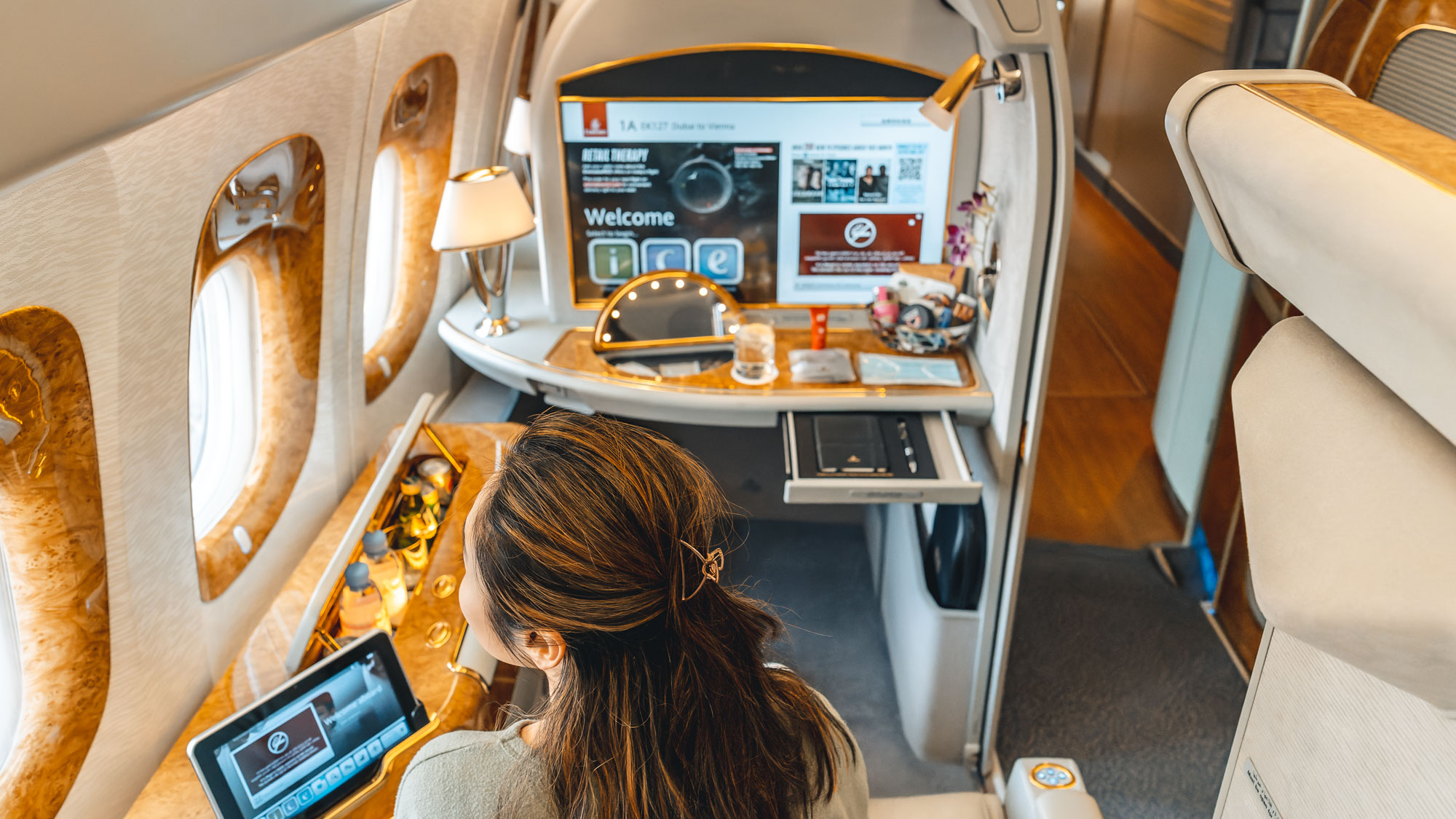
Devaluations have a habit of arriving unannounced
Airlines rarely roll out increases in reward seat pricing with fanfare. More often than not, it’s buried in a press release touting ‘enhancements’ to the program, or, in some cases, it just happens at very short notice.
We’ve seen it time and time again. Business Class reward prices jump by 20% at a time. Sweet-spot routes quietly disappear. Partner redemptions suddenly cost more than flying the airline’s own metal. If you were saving for that dream trip ‘one day,’ it might end up costing significantly more points than you planned.
When you earn points, you’re essentially banking on them being useful in the future. That’s harder to achieve when the airlines rewrite the rules every few years.
Point Hacks tip: Aim to save and spend your points within a year or two, max. Any longer, and you’re putting your balance at greater risk of devaluations and program changes.
Availability doesn’t always get better with age
Going hand in hand with devaluations, the availability of reward seats is also worth keeping in mind. Unlike a fine wine, I don’t think it really gets better with time.
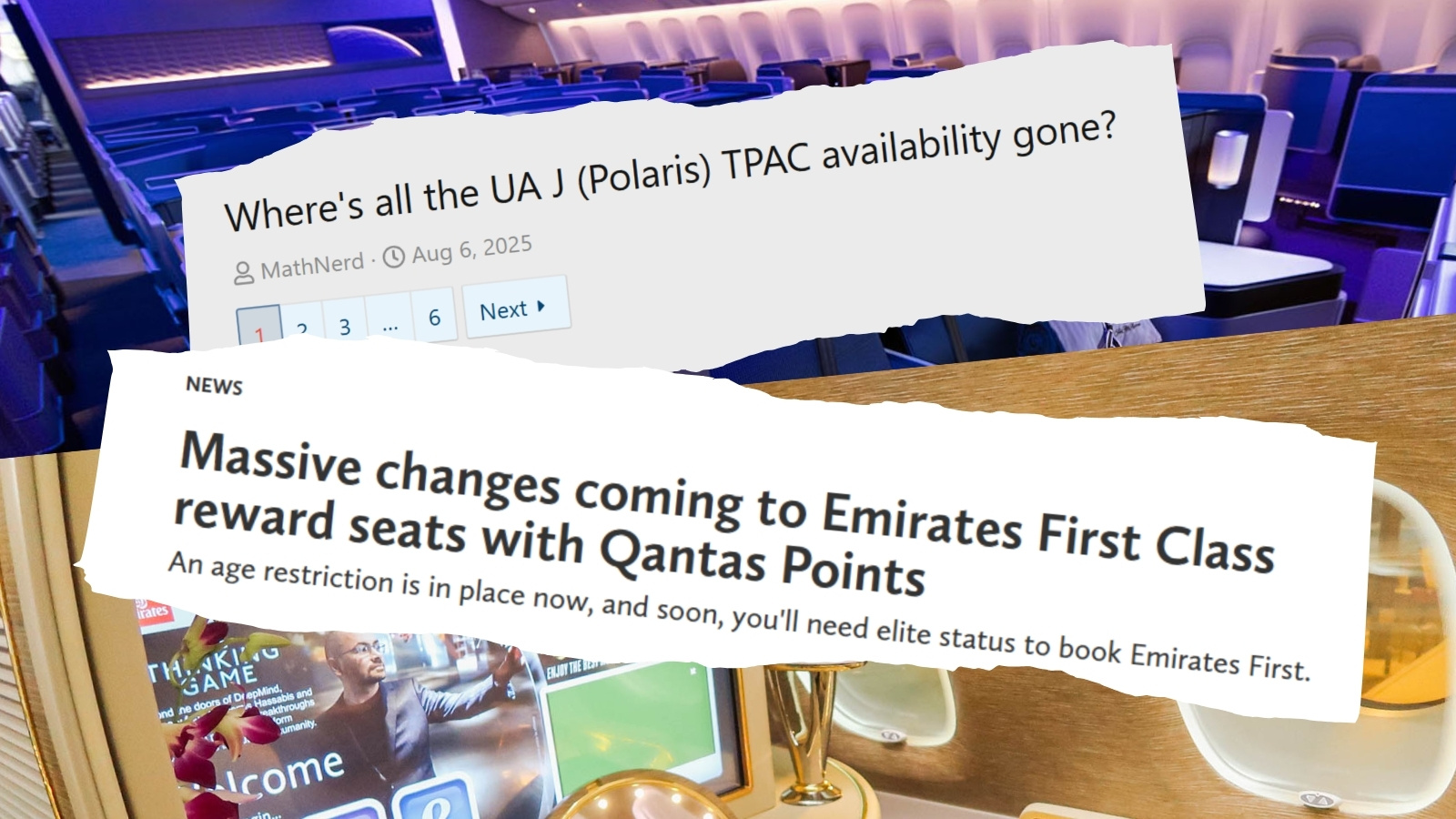
Airlines can – and do – pull award seats, limit partner access, or restrict premium cabin redemptions to elite members only. We’ve seen this recently with Emirates restricting First Class reward seats to Silver members and higher, and also enforcing the same rules via Qantas Frequent Flyer. Children under 9 years old are blocked, as well.
Late in 2025, Singapore Airlines Business Class reward seats vanished on many Australian routes via Velocity Frequent Flyer. The same happened with United reward seats between Sydney and LA. While access has since been somewhat restored, this highlights how unpredictable reward seat availability is.
Many programs include clauses that give you advance warning of major changes, such as increases in required points. But premium cabin reward seat availability is generally not a guaranteed benefit (particularly when offered by a partner), and airlines can pull seats without notice.
Points are meant to be spent
My philosophy is that travel is a now thing, not a someday thing. My partner and I have been lucky enough to enjoy annual trips to Europe in Business Class – sometimes biannually – with our points.
Booking 10-11 months in advance for the best availability, our cycle is usually to earn and redeem within a year, then we rinse and repeat. I’m often back to square one, but not for long. We usually also have a new trip booked and ready to look forward to before we finish the previous one.

I’ve contemplated saving up for a top-tier bucket list item. Another shot at Emirates First Class to Europe on the A380 with the shower would be a dream, or perhaps a booking on the current Singapore Airlines Airbus A380 Suites.
While we probably earn more points than the average couple, it’s still not a massive amount compared to some of the points whales out there. In the time it would take us to save up enough points for those First Class goals, we could probably already have booked separate return trips to Europe and Asia at a similar cost, with better availability.
Summing up
Using points earlier often means better memories, greater flexibility, and more opportunities to enjoy the benefits while they suit your life. This doesn’t mean you should blow points carelessly. I’m also not saying that you should never hoard points. Obviously, it still takes time to save up for a trip. But try to spend them in a reasonable timeframe.
That could mean locking in a solid Business Class redemption instead of waiting for an elusive First Class seat. Or using points for multiple trips rather than saving everything for one ‘ultimate’ journey. Or booking everyone in Economy if that’s an option – I’d still be happy to do that if it meant that another adventure could be cleared for take-off.
American Express Velocity Platinum

- Bonus points
- 50,000 bonus Velocity Points¹
- Annual fee
- $440 p.a.
- Earn
- 1.25 Velocity Points earned per $1 on all eligible spend except for government bodies⁵. 2.25 Velocity Points per $1 spent on selected Virgin Australia purchases⁵. 0.5 Velocity Points per $1 on Government spend⁵
American Express Velocity Platinum
- Bonus Points
- 50,000 bonus Velocity Points¹
- Annual Fee
- $440 p.a.
- Earn
- 1.25 Velocity Points earned per $1 on all eligible spend except for government bodies⁵. 2.25 Velocity Points per $1 spent on selected Virgin Australia purchases⁵. 0.5 Velocity Points per $1 on Government spend⁵
Earn 50,000 Velocity Points¹ when you apply online, are approved, and spend $5,000 on eligible purchases on your new American Express Velocity Platinum Card within the first 3 months. New American Express Card Members only.
Photography by Brandon Loo, who travelled at his own expense.


Hi Brandon, is there a “minimum $ per point” you aim for when redeeming especially if you are going to use points on an economy ticket?
Devaluation is a real problem so I earn, and burn when I can, usually domestic. With QF and VA you can buy points for under 2 cents on promotions. So I take award flights that return more than that, and bank their cash value to buy points when I need them. (Apart from domestic, I did jag a QF first flight LAX-SYD last November, although such flights are unicorns, and I’ve booked US transcon at short notice.)
A lot of truths in your article. I’ve been hoarding them for many years only for them to devalue and never got around to use them for an international flight in biz or first, only for domestic flights when I was flying back and forth to Perth from Sydney. I wish I had the luxury of booking a year in advance for leisure trips but circumstance never allows. Also, I have the worst luck whenever I plan a year in advance.